Watering seems like one of the simplest parts of plant care, but it is also one of the easiest things to get wrong. A plant needs water to survive, yet both too much and too little can create stress. Making matters more confusing, overwatered and underwatered plants can sometimes display remarkably similar symptoms. Wilting, yellow leaves, browning, leaf drop, and slow growth do not always point to one obvious cause.
Saralyn Wasserman explains that rather than relying on a single symptom, gardeners can learn to look at the entire plant, the condition of the soil, and even the roots when necessary. Water requirements also vary according to the plant species, temperature, humidity, light, container size, potting mix, and drainage. Because these factors continually change, watering plants according to a strict calendar is often less effective than regularly checking their actual condition.[1]
Why Overwatering and Underwatering Can Look So Similar
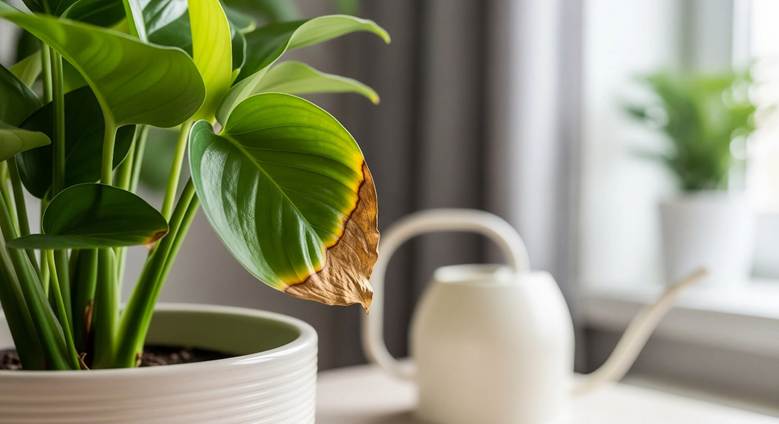
Wilting is usually associated with a thirsty plant, and there is good reason for that. When roots cannot supply enough moisture to the stems and leaves, a plant loses some of its firmness and begins to droop. If drought conditions continue, leaves may curl, yellow, brown, scorch, or fall from the plant. Long-term water stress can also slow growth and interfere with flowering.[2]
A plant can also wilt when its soil contains too much water. Excess moisture reduces the amount of available oxygen in the soil, which can damage fine roots and interfere with their ability to function. Eventually, damaged roots may become less capable of absorbing and transporting water. This creates the seemingly contradictory situation of a wilted plant sitting in wet soil.[3] That is why adding water immediately whenever a plant droops can sometimes make the problem worse. Gardeners should first check the soil and consider when the plant was last watered.
Recognizing the Signs of Overwatering
One of the more common signs of excess moisture is yellowing foliage, particularly when lower and inner leaves begin to yellow or wilt. Continued exposure to excessive moisture may eventually contribute to leaf scorch, leaf drop, poor growth, and more extensive plant decline. Soil provides another useful clue. If the potting mix remains noticeably wet long after watering, the roots may be receiving more moisture than they can handle. This does not necessarily mean the gardener is pouring an unusually large amount of water into the pot. A container without sufficient drainage, an overly dense potting mix, or a pot that is too large for the plant can all allow moisture to remain around the roots longer than necessary.
Root condition can help confirm the problem when symptoms become severe. Healthy roots are generally light-colored and firm, while roots affected by rot may become dark, soft, or mushy. Root and crown rot can produce symptoms including yellowing, browning, poor growth, dieback, and wilting even when moisture is readily available in the soil.[4] This distinction is important because a severely over-watered plant does not need additional water simply because its leaves are drooping. The problem may actually be occurring below the surface, where damaged roots can no longer function normally.
Recognizing the Signs of Underwatering
Underwatering generally occurs when a plant loses moisture faster than its roots can replace it. One of the first visible signs may be wilting or curling leaves. As dry conditions persist, gardeners may notice brown or scorched areas, yellowing, leaf drop, slowed growth, or damaged flowers. The condition of the soil is often the easiest way to determine whether lack of water is contributing to these symptoms. Dry potting mix may feel noticeably lighter and can sometimes begin pulling away from the sides of the container. Gardeners can also become familiar with the weight of their potted plants. A container with dry potting mix will usually feel considerably lighter than it does shortly after a thorough watering.
In some cases, plants that have been allowed to become extremely dry cannot be fully rehydrated with one quick splash of water. Severely dried potting media may require multiple applications of water to become thoroughly moist again.[5] Gardeners should also remember that occasional wilting does not necessarily indicate a serious problem. A plant can temporarily wilt on a particularly hot day because moisture is evaporating from its leaves faster than its roots can replace it. If adequate moisture remains in the soil, the plant may recover as temperatures fall. Checking the soil before watering helps distinguish this temporary response from genuine drought stress.
Check the Soil Before Reaching for the Watering Can
Because the symptoms of overwatering and underwatering overlap, checking the soil is one of the most useful habits a gardener can develop. For many houseplants, inserting a finger approximately two inches into the potting mix can provide a quick indication of whether moisture remains below the surface. Larger containers can be more difficult to judge. One option is to insert a wooden stick or dowel deeper into the pot. Moist potting mix may cling to the stick or leave it visibly damp. Lifting smaller pots can also help gardeners recognize changes in moisture by weight.
It is important to remember that not every plant should be watered when the soil reaches exactly the same level of dryness. Some species prefer consistently moist but well-drained soil, while others should dry considerably between waterings. Cacti and succulents, for example, typically have very different moisture requirements from tropical plants which are accustomed to more consistently moist conditions. The goal is not to find one watering rule that works for every plant, but rather, to develop a reliable method for determining when each individual plant needs water.
Pay Attention to Drainage and Root Health
Good watering practices depend heavily on good drainage. A gardener can carefully control watering frequency and still encounter problems if excess moisture has nowhere to go. Containers should generally have drainage holes that allow water to move freely through the potting mix. After watering, excess water that collects in a saucer should be emptied rather than leaving the container sitting in it. A well-draining potting medium is equally important because roots need access to both moisture and oxygen.
When a plant continues wilting even though its soil remains wet, examining the root system may be necessary. Dark, soft, or discolored roots can indicate root disease or deterioration. Depending on the severity of the problem, damaged portions may need to be removed, and healthy sections replanted. Severely affected plants may not recover.[6]
The opposite problem can occur when a plant becomes pot-bound. A dense mass of roots may fill most of the container, leaving little potting mix available to retain moisture. Water can sometimes pass rapidly through the container without adequately moistening the center of the root ball. Plants in this condition may develop browning along leaf margins or display other symptoms associated with insufficient water despite frequent watering.[7]
Stop Watering According to a Fixed Schedule
A common plant-care habit is choosing a particular day of the week for watering. While a regular reminder to check plants can be useful, a regular schedule that requires every plant to be watered, whether it needs it or not, can create problems. Plants do not use water at exactly the same rate throughout the year. Increasing daylight and active growth can increase water use, while reduced light and slower growth can decrease it. Container size also matters, as do temperature and humidity. Even the container material can make a difference because porous materials, such as unglazed clay, can lose moisture more quickly than plastic.
Seasonal changes can alter watering requirements significantly. University of Minnesota Extension advises allowing the plant and soil to guide watering rather than relying on the calendar, noting that plants may use more water as brighter conditions stimulate additional growth.[8] A good routine to follow would be to check plants on certain days rather than to automatically water them. Some may need water, while others may still have plenty of available moisture.
Water Thoroughly When the Plant Needs It
When a plant does need water, thoroughly moistening the root zone is usually preferable to repeatedly giving it small amounts. For many container plants, water can be applied until the excess begins draining from the bottom of the pot. The container should then be allowed to thoroughly drain, and standing water should be removed from the saucer.
Outdoor gardens benefit from thoughtful watering as well. Watering deeply and less frequently can encourage healthier root development, while directing water toward the base of plants can help deliver moisture where it is most needed. Mulch can also reduce evaporation and help to moderate soil temperatures in garden beds.[9] The amount and frequency should always depend on the individual plant and its environment. A large plant growing in bright light will likely use water faster than a smaller plant in a shaded location.
Look at the Whole Plant Before Diagnosing the Problem
Yellow leaves do not automatically mean a plant has been overwatered — just as brown leaf tips do not prove that it has been underwatered. Plant symptoms can have many possible causes. Improper light, sudden temperature changes, drafts, fertilizer issues, insects, disease, and transplant stress can produce symptoms that resemble watering problems. Illinois Extension notes that browning leaf tips, loss of normal foliage color, spotted foliage, and leaf drop can each have several potential causes.[10]
For that reason, gardeners should treat plant symptoms as clues rather than definitive answers. It’s important to consider how the soil feels, how quickly it dries, when the plant was last watered, whether the container drains properly, and whether the roots appear healthy. It can also be helpful to consider whether other conditions have recently changed, such as the plant’s location, light exposure, temperature, or fertilizer routine.
Learning to water successfully is ultimately less about following a universal formula, and more about observation. Plants provide signals through their leaves, stems, soil, roots, and growth patterns. By checking these clues before automatically adding water, gardeners can become better at distinguishing between too much moisture and too little, and to ultimately give each individual plant the conditions it needs to thrive.
[1] University of Illinois Extension, “Watering,” Houseplants. https://extension.illinois.edu/houseplants/watering
[2] University of Maryland Extension, “Drought Stress to Indoor Plants.” https://www.extension.umd.edu/resource/drought-stress-indoor-plants
[3] University of Maryland Extension, “Overwatered Indoor Plants.” https://extension.umd.edu/resource/overwatered-indoor-plants
[4] University of Maryland Extension, “Root Rots of Indoor Plants.” https://www.extension.umd.edu/resource/root-rots-indoor-plants
[5] University of Maryland Extension, “Watering Indoor Plants.” https://www.extension.umd.edu/resource/watering-indoor-plants
[6] University of Maryland Extension, “Diagnose Indoor Plant Problems.” https://extension.umd.edu/resource/diagnose-indoor-plant-problems
[7] University of Maryland Extension, “Pot-Bound Indoor Plants.” https://www.extension.umd.edu/resource/pot-bound-indoor-plants
[8] University of Minnesota Extension, “Spring Houseplant Care.” https://extension.umn.edu/garden-and-home/yard-and-garden/gardening-in-minnesota/houseplants/spring-houseplant-care
[9] University of Minnesota Extension, “Water Wisely: Start in Your Own Backyard.” https://extension.umn.edu/garden-and-home/yard-and-garden/gardening-in-minnesota/water-wisely-start-in-your-own-backyard
[10] University of Illinois Extension, “Troubleshooting,” Houseplants. https://extension.illinois.edu/houseplants/troubleshooting